Image: SSC
Sweden's Orbital Moment
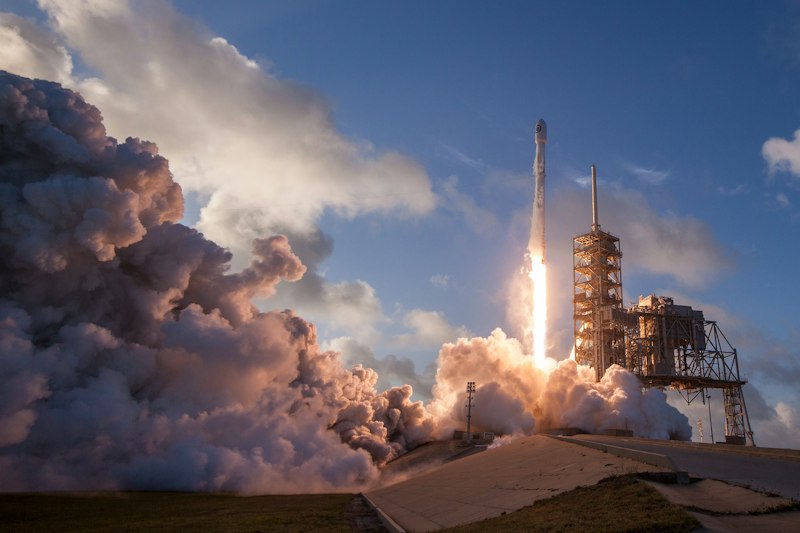
The integration team for Sweden's first orbital launch campaign has arrived at Esrange Space Center in Kiruna, marking the beginning of the final checkout phase for Europe's newest orbital launch site. If all goes according to plan, a small satellite will be launched into polar orbit from Swedish territory before the end of 2026.
Esrange: From Sounding Rockets to Orbit
Esrange has been launching sounding rockets since 1966 — making it one of Europe's most experienced launch sites. The upgrade to orbital capability represents a natural evolution, but one that has required significant infrastructure investment.
Key Infrastructure
The orbital launch complex includes:
- New launch pad capable of handling vehicles up to 35 tonnes at liftoff
- Payload processing facility with ISO Class 8 clean rooms
- Propellant storage and handling for both solid and liquid propellants
- Upgraded tracking and telemetry extending the existing sounding rocket range
Investment
Total investment in the orbital upgrade has reached approximately €200M, funded through a combination of:
- Swedish national space budget
- ESA's European Space Launch Vehicles programme
- European Regional Development Fund
- Private investment from launch service providers
The First Mission
The maiden orbital launch will carry a small satellite payload to sun-synchronous orbit. While specific mission details remain under contract confidentiality, the profile involves:
- A micro-launcher vehicle developed by a European launch company
- Payload mass of approximately 150 kg to SSO
- Direct injection into target orbit — no upper stage coast phase required
The first launch from Esrange will be modest in terms of payload mass. But its significance is enormous. It proves that Europe can launch to polar orbit from European territory, with European vehicles, operated by European companies.
Complementing Andøya
The relationship between Esrange and Norway's Andøya Spaceport is frequently characterised as competition. The reality is more collaborative:
- Different orbit specialisations: While both serve polar orbits, their specific inclination ranges and trajectory constraints differ
- Shared infrastructure: The two sites share range safety and tracking resources under bilateral agreements
- Combined capacity: Together, they provide redundancy and surge capability for European polar orbit access
The Nordic Launch Corridor
Sweden and Norway are jointly developing the concept of a Nordic Launch Corridor — shared airspace and maritime safety zones that can be activated for launches from either site. This reduces the per-launch cost of range operations and improves scheduling flexibility.
Market Position
Esrange enters the launch services market at an interesting time:
- Growing demand for dedicated small satellite launches to SSO
- Limited European competition for polar orbit access
- Institutional anchor customers including Swedish national missions and ESA programmes
The site plans to ramp up to 4–6 launches per year by 2028, with capacity for further growth as demand develops.
What to Watch
Key milestones for 2026:
- Q2: Launcher vehicle arrival and integration
- Q2–Q3: Combined systems testing and dress rehearsals
- Q3–Q4: Launch window opens for maiden mission
The success of Esrange's first orbital launch will be a milestone not just for Sweden, but for the entire Nordic space ecosystem and for European launch autonomy.
Get briefings like this every Thursday.