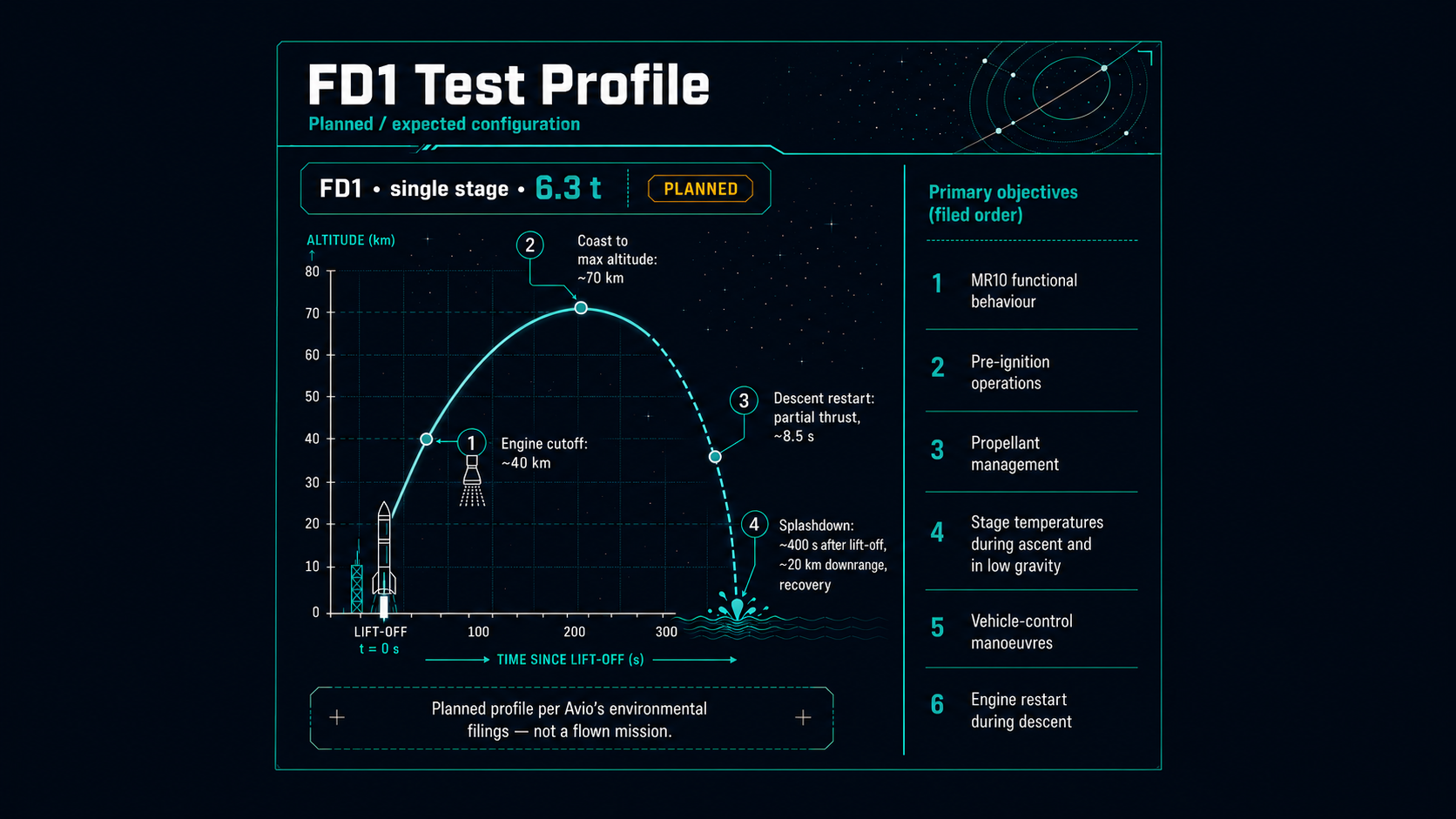
Avio's filed FD1 flight profile: engine cutoff at roughly 40 km, coast to a planned maximum of 70 km, a descent restart, and splashdown with recovery, per the company's environmental filings for the demonstrator. Space Insights.
Environmental documents that Avio filed with Sardinia's regional environmental authority on 17 March 2026, reported by European Spaceflight on 14 August, set out the planned flight profile for the company's FD1 suborbital demonstrator. They describe a 6.3-tonne single-stage vehicle powered by the MR10 methalox engine, intended to fly from a temporary launch complex on the Italian Ministry of Defence's Salto di Quirra test range on the east coast of Sardinia, with commissioning of that complex expected to conclude in November.
The planned profile is specific. On the filed sequence, the engine is to carry the vehicle to an altitude of around 40 km before shutting down, after which it would coast to a maximum of roughly 70 km. During the descent the engine is to be reignited at partial thrust for around 8.5 seconds before shutting down again. The vehicle would then continue unpowered and splash down approximately 400 seconds after lift-off, around 20 km from where it was launched, where it is expected to be recovered.
Avio's filings name six main objectives for the flight: verifying the functional behaviour of the MR10 engine, validating pre-ignition operations, assessing propellant management, monitoring stage temperatures during ascent and in low-gravity conditions, demonstrating vehicle-control manoeuvres, and attempting an engine restart during descent. The demonstrator is described as validating key building blocks for Avio's next-generation launch vehicles beyond Vega E. Per European Spaceflight, it is being developed within Avio's Space Transportation System programme, under a contract awarded and administered nationally through Italy's National Recovery and Resilience Plan.
Everything in the paragraphs above is planned or expected. None of it has happened.
What the objectives say that the specification does not
A 6.3-tonne single-stage vehicle planned to reach roughly 70 km is not an orbital launcher, and the filings do not present it as one. It is a demonstrator, and the useful question about a demonstrator is not how high it goes but what its designers have decided to find out.
On that measure the objective list is legible. Engine functional behaviour, pre-ignition operations, propellant management, stage temperatures, control manoeuvres and an in-flight restart are all operational questions. They concern whether a vehicle can be prepared, ignited, managed in flight, controlled and brought back down — the sequence a launch operator has to execute reliably and repeatedly.
One of the six points further than that: the attempted engine restart during descent. Separately, the filed flight profile says the vehicle is expected to be recovered after splashdown. Together, those details put attention on how the hardware is handled through and after the flight.
They are not the questions a programme foregrounds when the open risk is performance. A company uncertain about thrust or structural margin writes a different list.
Space Insights editorial read: a programme whose technical concept is settled enough that the remaining unknowns are about operating it. That is our framing of the objective list, not a claim made in the filings, and it should be read as an inference rather than a finding.
The pad is new, even if the range is not
Salto di Quirra is not a new facility. It is the Poligono Sperimentale e di Addestramento Interforze, an Italian inter-service experimental and training range at Perdasdefogu in Sardinia, administered under Air Force Logistics Command. The institutional character of the site is therefore a Ministry of Defence range hosting a civil demonstrator, which is how the filings describe the arrangement.
The launch complex itself is new. The documents describe a temporary installation that Avio is erecting on the range's ground and will later remove, with an obligation to restore the site fully once activities are complete. As described in the documents, it is to comprise storage and handling systems for liquid methane, liquid oxygen and liquid nitrogen, telemetry and remote-control equipment, power generation and fire suppression, on an elevated pad anchored to concrete blocks resting on the surface, with no groundworks. Construction was scheduled to begin in May, and commissioning is expected to be concluded in November. At the Mediobanca CEO Conference in Milan on 23 June, Avio said construction of the testing facility was ongoing.
That distinction matters for how the date should be read. This is a bounded piece of physical work with a checkable outcome, in a way that a permanent spaceport programme is not, and in the filed sequence it comes before any flight. The milestone is an installation being finished on a working range, and it is the kind that either occurs by the stated month or visibly does not.
Neither the environmental documents nor the June presentation gives an estimated launch date. Avio's nine-month 2025 financial report, published on 28 October 2025, indicated that the FD1 flight demonstration was expected in 2026. European Spaceflight's own reading is that commissioning concluding in November would leave a narrow window before the end of the year for final preparations and the flight. For readers tracking European launch capacity, the first observable checkpoint is the commissioning.
Where this sits in the week
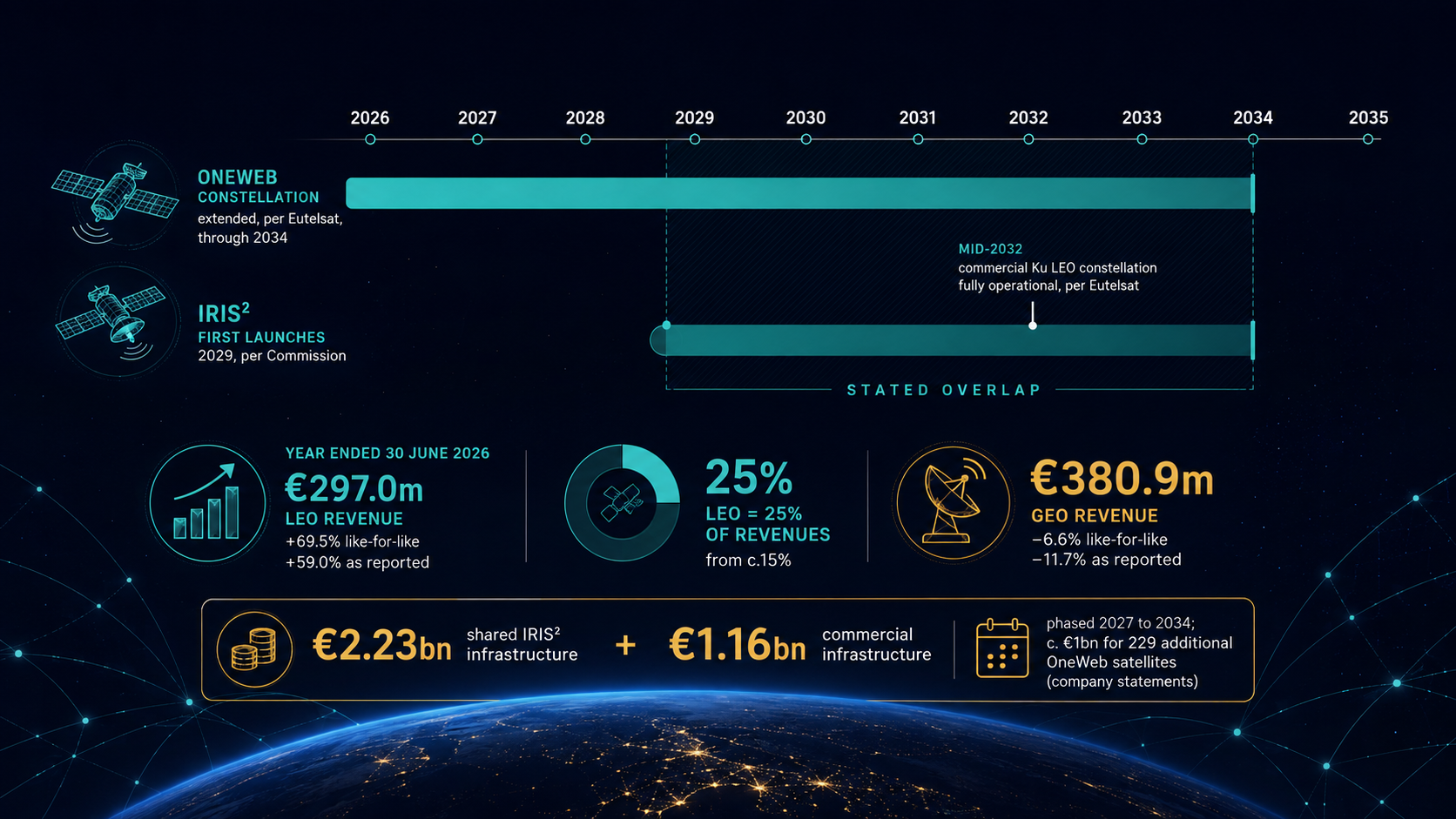
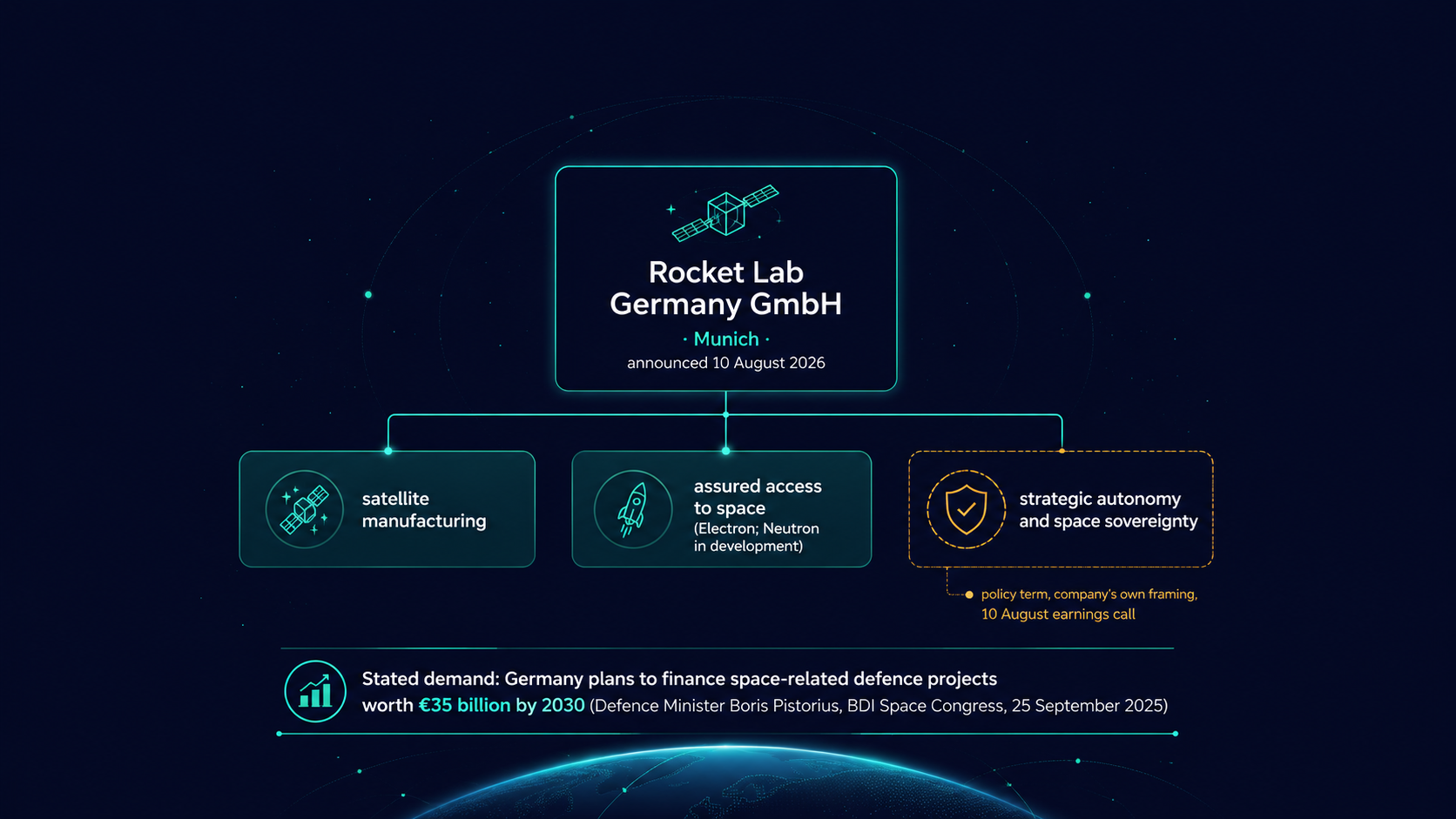
Space Insights cross-file editorial read. Two of this week's other signals concern who pays for European capability and who is positioning to supply it: IRIS² signed at 348 satellites, with Polish and Spanish national commitments landing in the same weeks, and a US launch company announcing a German subsidiary in Munich against Germany's stated space defence investment.
FD1 is the same subject approached from the workshop floor, and it is public money too. An established European propulsion company is preparing to put a demonstrator on an Italian military range to answer operational questions about its next generation of launch systems, under a contract awarded and administered nationally, through Italy's National Recovery and Resilience Plan, which is itself resourced by the EU's NextGenerationEU facility. The route runs through Rome rather than through a Union space programme, and the policy term attached to it is Italian. Placing the three signals side by side is a Space Insights editorial reading; the primary records for the other two are carried in this week's separate pieces on the IRIS² implementation agreement and on Rocket Lab's Munich announcement, and neither of those actors connects itself to FD1.
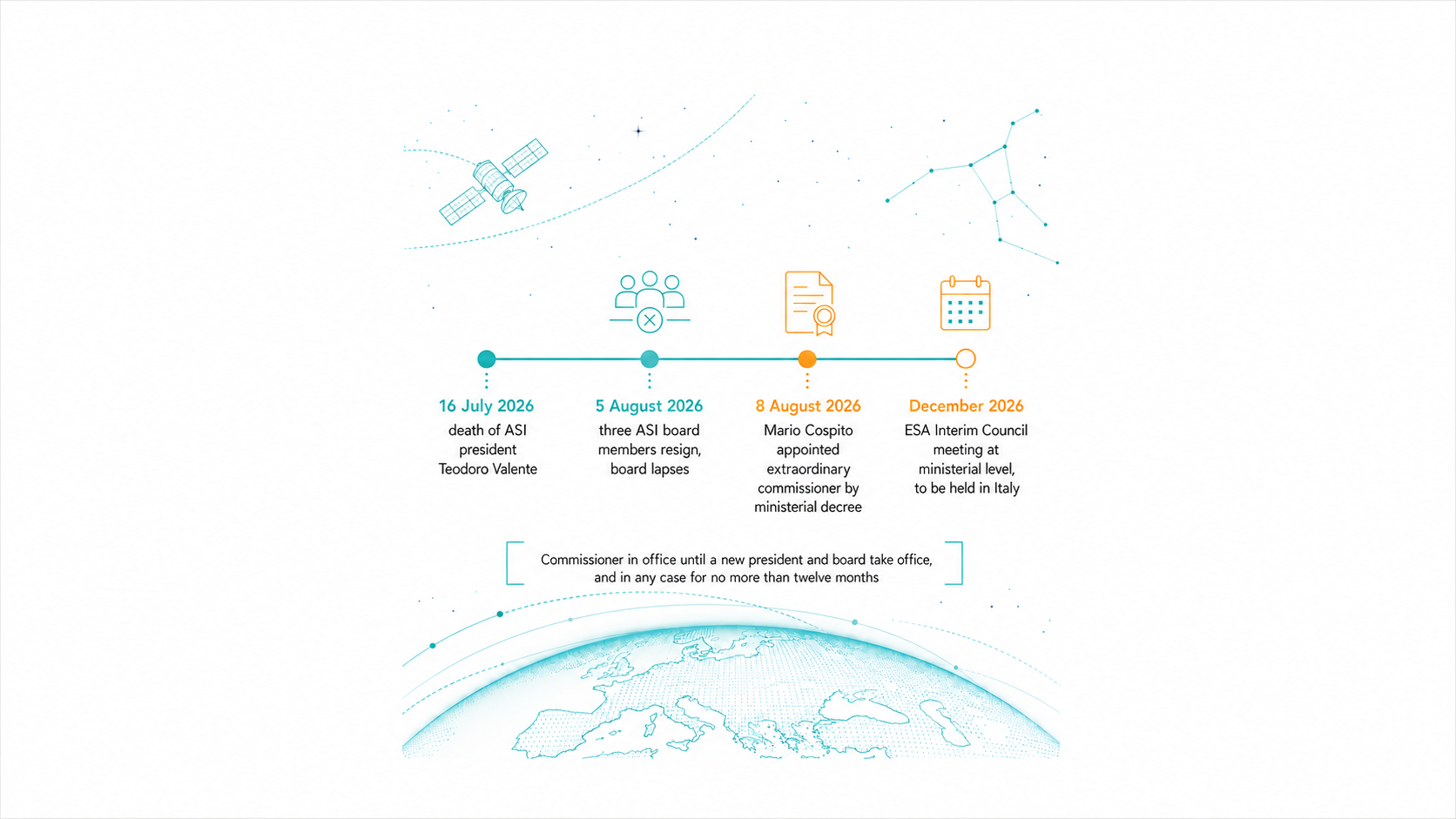
One factual connection is recorded here plainly, because it also appears in this week's separate signal on the Italian Space Agency: Mario Cospito, appointed ASI extraordinary commissioner this month, took up the post of vice-president and head of institutional relations at Avio S.p.A. in 2021, per ASI's published biography of the commissioner. It is recorded as biography, so that a reader encountering both pieces is not left to discover the overlap unaided.
Sources
Get briefings like this every Friday.
Subscribe