ICEYE MikroSAR / POLSARIS handover to Poland's ARGUS, 15 May 2026 — four SAR satellites, under 12 months from contract signature. The operational-delivery surface of the W22 European autonomy file. Space Insights.
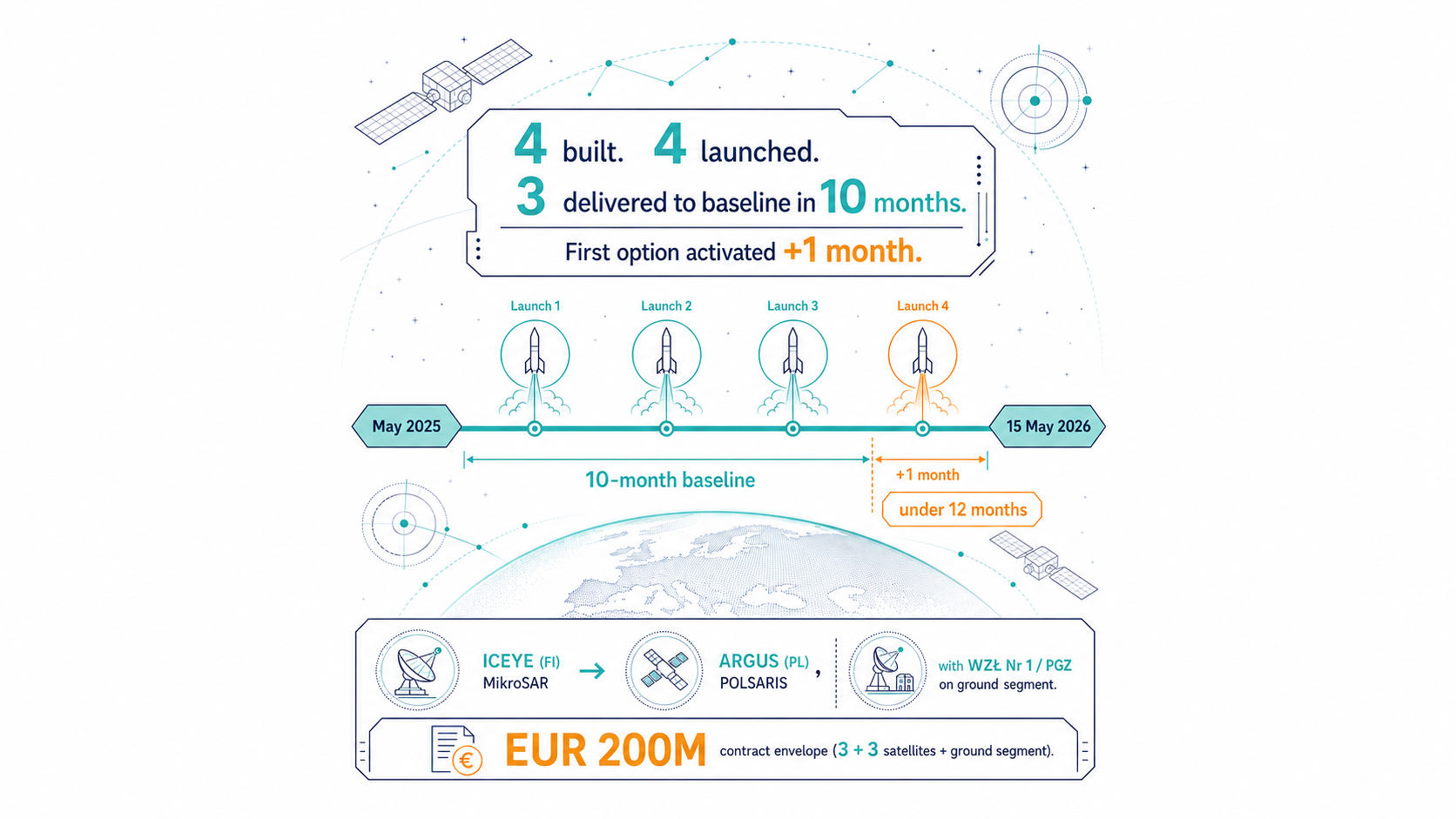
On 15 May 2026, Finnish ICEYE handed over its MikroSAR system — designated POLSARIS (Polish SAR Intelligence System) by ARGUS — to Poland's Geospatial Reconnaissance and Satellite Services Agency (ARGUS), after building and launching four synthetic aperture radar satellites: three delivered within the 10-month baseline scope of the May 2025 contract, with the first option activated one month later. The contract was signed in May 2025 for approximately EUR 200 million covering an initial three-satellite batch, options for three more satellites, and additional ground-segment capabilities. The transaction sits inside a 12-month window from signature to operational handover.
For European space-sector planners, the operative datapoint is the delivery-speed envelope, not the SAR specification. ICEYE's own institutional framing in the press release: the contract execution "marks the fastest deployment of an operational satellite program in the world and among the fastest-implemented procurement programs in the history of the Polish military". ICEYE CEO Rafał Modrzewski described the outcome as "proof that ambitious space programs can be delivered on our own terms, to our own standards, and at the right pace". Polish Deputy Prime Minister and Minister of National Defence Władysław Kosiniak-Kamysz characterised the handover as "another important step in developing Poland's modern intelligence-gathering capabilities".
What was delivered, and what was not
The 15 May 2026 ICEYE press release records the operational delivery profile.
Satellites: four SAR spacecraft built and launched. Three delivered to ARGUS within the 10-month baseline scope of the May 2025 contract. The fourth satellite corresponds to the first contract option, which ARGUS activated one month after baseline delivery.
Ground segment and mobile infrastructure: included in the EUR 200 million contract envelope. ICEYE led the system and space segment; Polish industry, through Wojskowe Zakłady Łączności Nr 1 S.A. (WZŁ Nr 1, part of Polska Grupa Zbrojeniowa / PGZ), delivered ground-segment and mobile-infrastructure elements. The press release does not detail the specific ground-segment architecture beyond identifying the industrial partner; this is consistent with operational discretion for a sovereign-capability customer.
Customer entity: Geospatial Reconnaissance and Satellite Services Agency (ARGUS), the Polish Ministry of National Defence agency headed by Col. Leszek Paszkowski that is the receiving institution for the MikroSAR system. Col. Paszkowski characterised the handover as "the entry of the MikroSAR system into operational use is a significant moment in building the sovereign satellite reconnaissance capabilities of the Polish Armed Forces".
Constellation naming: the system is procured as ICEYE's MikroSAR programme and operated by ARGUS under the POLSARIS (Polish SAR Intelligence System) designation. MikroSAR is the system name; POLSARIS is the operational designation used by ARGUS.
Option tranche: the press release records that the first option was activated one month after baseline delivery. The status of the remaining two optional satellites within the original May 2025 envelope (which provided for three optional satellites in addition to the three-satellite baseline) is not stated in the 15 May 2026 release.
Capability profile that is in the press release: the system is described as offering imaging resolution as fine as 25 cm, with the capacity to "acquire imagery from anywhere in the world, day or night and in any weather", and operating modes ranging from wide-area surveillance to high-precision imaging of specific areas. What the press release does not specify is revisit-time profile, tasking architecture and the operational integration framework — and that omission is appropriate for a sovereign-capability handover. Speculation on those parameters is not the editorial value of this signal.
Why the speed datapoint matters
European sovereign-capability procurement timelines have historically been measured in years, not months. The ICEYE-ARGUS contract envelope sets a different reference point. The press release frames it explicitly, in ICEYE's own words, as "the fastest deployment of an operational satellite program in the world".
For procurement planners and Programme Managers across European national space frameworks, three structural reads follow.
Procurement architecture matters more than vendor identity. A contract that delivers four SAR satellites — three to baseline scope inside 10 months and the fourth corresponding to the first activated option — requires a specific procurement architecture: pre-existing manufacturing capacity at the vendor (ICEYE's commercial SAR constellation as the production line), a sovereign-customer specification that does not require new spacecraft platform development, and a contracting authority capable of authorising rapid-delivery terms. The Polish MOD-ICEYE pairing combined all three. Replication requires similar pre-existing capacity in other European vendor-customer pairings.
The Finnish-Polish corridor is a delivered case, with shared industrial scope. ICEYE is Helsinki-headquartered. ARGUS is a Polish ministerial agency. WZŁ Nr 1 / PGZ is the Polish ground-segment and mobile-infrastructure partner. The Finnish-Polish corridor in this case is not only vendor-to-customer; ICEYE led the system and space segment, while Polish industry delivered ground-segment and mobile-infrastructure elements. The case will likely be read by other Nordic and EU defence-space actors as a reference point, but replication depends on vendor capacity, customer requirements and contracting authority.
EUR 200 million is the contracting envelope for an initial three-satellite SAR baseline plus three optional satellites and additional ground-segment capabilities. The May 2025 contract announcement records the figure as covering an "initial batch of three ICEYE SAR satellites, and an option to purchase three more satellites and additional ground segment capabilities". The fourth satellite handed over on 15 May 2026 corresponds to the first activated option; the contract envelope was not for four satellites as a fixed scope. This is the cost reference point for similar future procurements with similar three-plus-three architectures.
How ICEYE's commercial constellation enables the speed
ICEYE describes itself in the press release as owning and operating "the world's largest and most advanced SAR satellite constellation". The exact in-orbit fleet count is not stated in the 15 May press release. The pre-existing commercial-fleet architecture is the load-bearing element behind the under-12-month delivery envelope; contracting with a vendor whose commercial production line is already in serial operation removes the spacecraft-development lead time from the procurement schedule.
For sovereign customers, the cost-benefit logic is structural: the MikroSAR delivery to ARGUS is a working instance of that procurement logic at sovereign scale.
This is industrial-structure analysis. It is not a comment on the capability of any other vendor architecture or any other European national programme.
What this means for European sovereign capability planning
The ICEYE-ARGUS case is a reference point three different European audiences are likely to engage with.
National space framework planners comparing procurement architectures are likely to focus on the contracting terms that allowed a 12-month envelope. The detail is not in the press release; it may surface through national MOD procurement reporting in due course.
European prime architects building sovereign-capability proposals against the EU Space Act, the IRIS² secure connectivity envelope, the EU Defence Industrial Strategy and Member State sovereign-EO procurement pipelines now have an under-12-month figure available as a reference benchmark. Whether it can be matched outside the ICEYE-MikroSAR-class architecture is a separate question that the press release does not address.
Nordic ecosystem actors — Kongsberg, KSAT, ICEYE itself, Beyond Gravity, Sweden's Saab, Norway's Andøya Space — now have a delivered case of a Nordic-headquartered space-tech vendor operating at sovereign-customer scale outside the home country. The ICEYE + ARGUS + WZŁ Nr 1 / PGZ triplet is one publicly visible precedent on that axis.
Space Insights cross-file editorial read
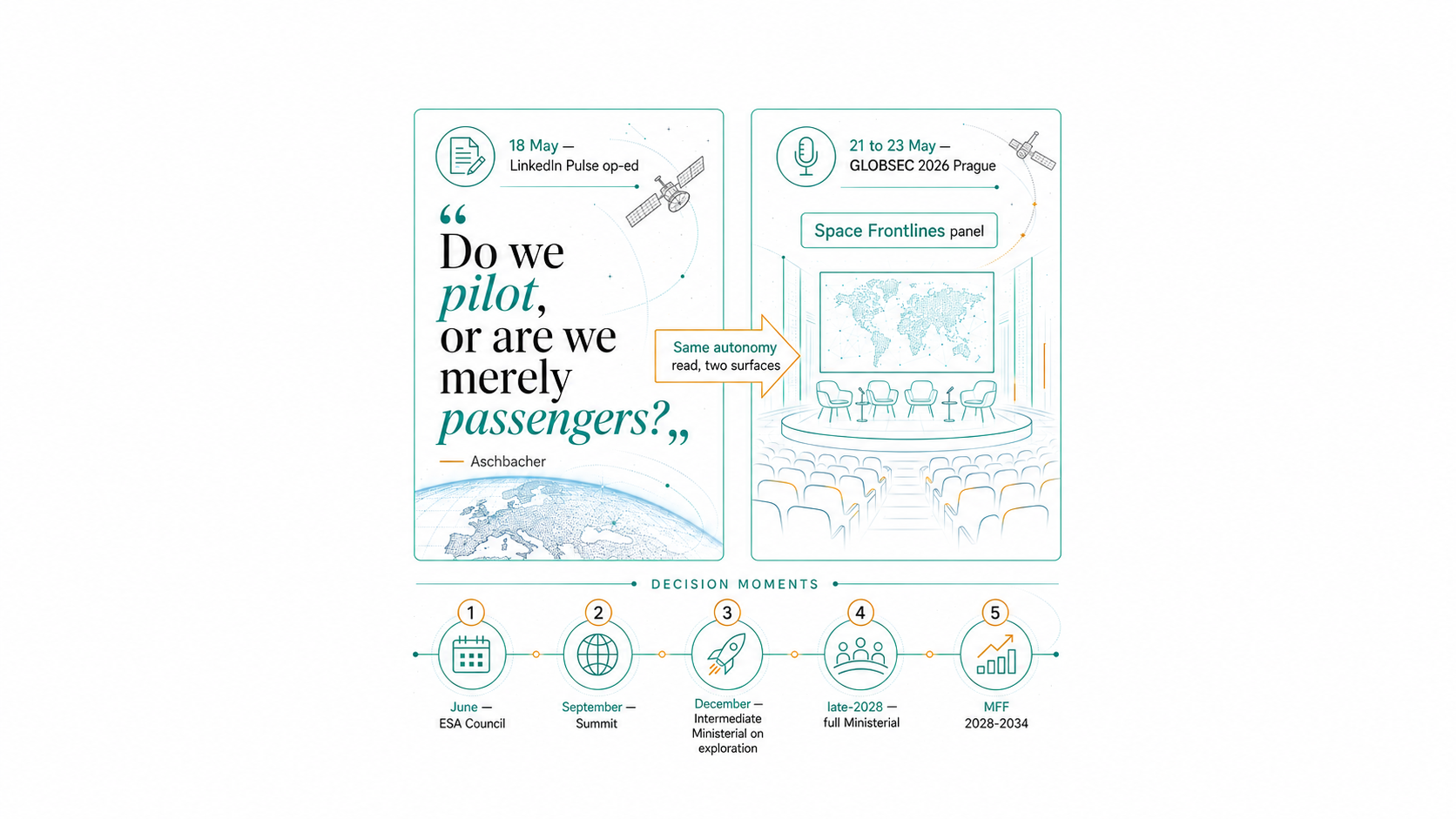
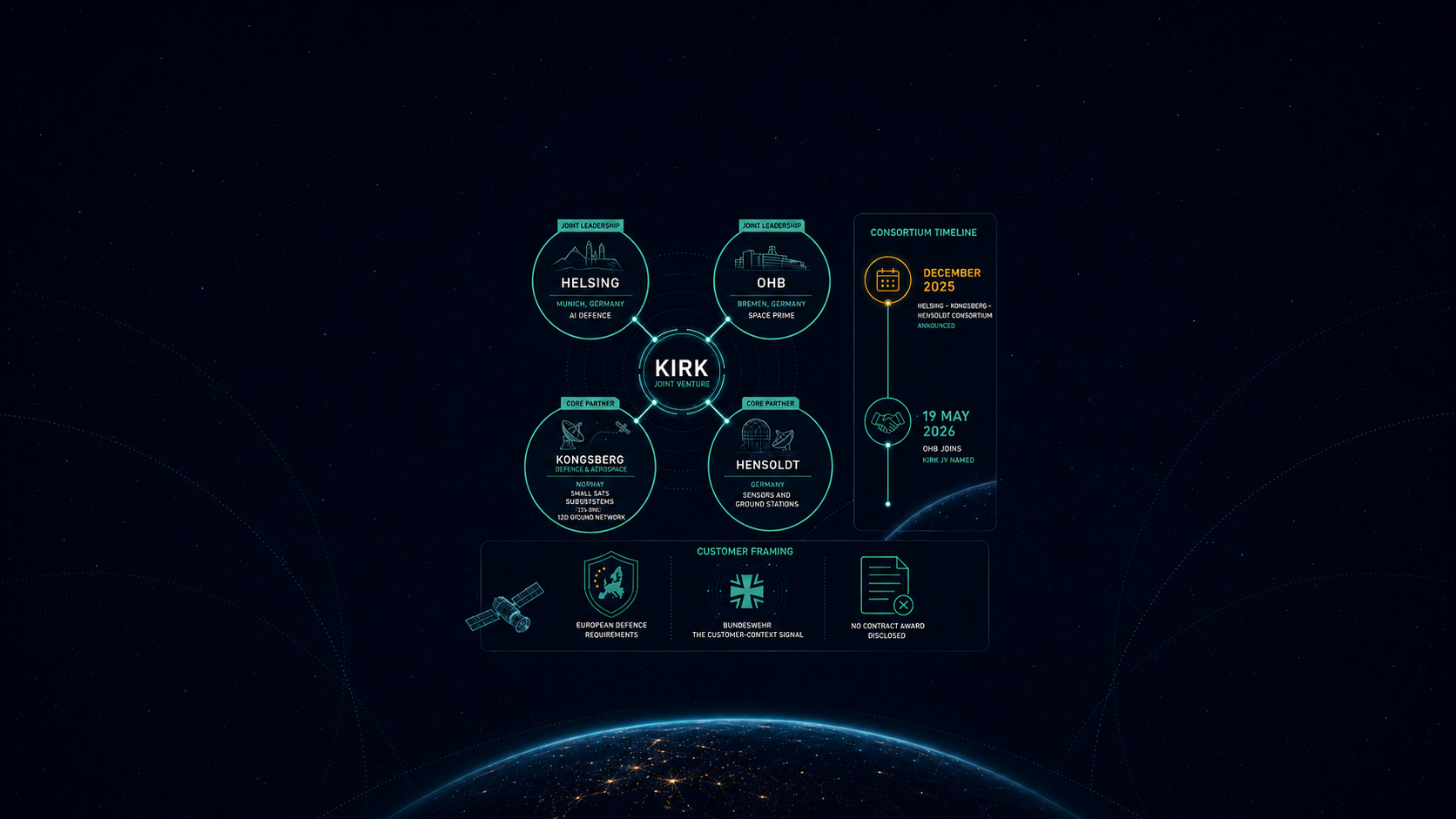
Reading the MikroSAR handover alongside the Aschbacher op-ed (Space Insights W22 Signal 3) and the Helsing-OHB-Kongsberg KIRK JV announcement (Space Insights W22 Signal 10), three different surfaces of one structural question come into view: can Europe deliver sovereign space capability at speed?
The Aschbacher op-ed reads from the political-leadership level, with autonomy as the framing. The KIRK joint venture reads from the prime-architecture level, with consortium integration as the model. The MikroSAR delivery reads from the operational-procurement level and, uniquely among the three W22 signals, with a delivered case rather than a planned commitment. KIRK is positioning. MikroSAR is delivered evidence.
The three surfaces are not equivalent. Political-leadership and industrial-architecture announcements are positioning. Operational delivery is execution. On the specific evidence of the ICEYE-ARGUS procurement, the MikroSAR handover shifts the autonomy thesis from positioning to delivered evidence on one specific contract.
This is an editorial reading by Space Insights of three W22 signals, not a single primary-source statement; the source articles for the Aschbacher and KIRK threads are Space Insights' own W22 coverage (Signals 3 and 10), and the MikroSAR primary source is the 15 May 2026 ICEYE press release.
What is uncertain
The press release does not specify ARGUS tasking architecture or operational integration with NATO assets. It does not record the future-option exercise timeline beyond the first activated option. The status of the remaining two optional satellites within the original May 2025 envelope is not stated in the 15 May 2026 release.
What the release does record is a 15 May 2026 handover within an under-12-month delivery envelope of a sovereign SAR system to a Polish ministerial agency. That is the editorial fact.
Forward look
Two watch items for the second half of 2026:
- Remaining option status — whether any further public statement from ARGUS or ICEYE clarifies the status of the two remaining optional satellites within the original May 2025 envelope.
- Replication pattern — whether other European national space frameworks (Norwegian, Swedish, German, Italian) contract with commercial constellation vendors on comparable rapid-delivery terms.
The MikroSAR handover is a single delivered case. Whether it becomes a category — sovereign capability delivered in months, not years — depends on how other Member States position their procurement architectures in the next 12 to 18 months.
Sources
- 1.ICEYE delivers MikroSAR system to Polish Armed Forces in under 12 months — ICEYE
- 2.ICEYE delivers MikroSAR system to Polish Armed Forces in under 12 months (PR Newswire mirror) — PR Newswire
- 3.ICEYE to provide SAR satellites for the Armed Forces of Poland — ICEYE (original contract announcement, May 2025)
Get briefings like this every Friday.
Subscribe